I grew up in a small town called Northville, Michigan. The whole downtown area had two streets that crossed one another, and yet as a child, these two streets seemed like they held a world of their own. I remember wondering what the woman baking the bread in the Great Harvest Baking Company was doing after work, or what it would be like to enjoy two shortbread cookies and have a long conversation with the barista at the single Starbucks in the downtown area – a Starbucks that set itself apart from other Starbucks’ with its stony exterior, an interior that felt like a ski lodge, and its extra delicious Salted Caramel Mochas. And yet, I noticed as I got older, that these conversations are hard to come by. People are increasingly engrossed in their own universes, afraid to cross over into a different world. And yet, with simple conversations, an entire paradigm can change. The way that you are looking at the world shifts. Memories get engraved in your brain for reasons that you can’t seem to place. The world is filled with billions of ways of looking at the world, billions of kaleidoscopes, and each of those kaleidoscopes has a mind of its own.
As a student, I was always quite indecisive about what I “wanted to do when I grew up.” I thought about it so much as a kid, because somehow that question seems to define what you will be like. I decided that what I wanted to be was free. I wanted to learn as much as I could about the world around me. I wanted to feel gentle sands between my toes and hear a million languages I could not understand and ask questions and write things down and find not just one place, but many places in the world to call home. And so I studied Computer Science, to be practical and to attain a skill that would be useful in an increasingly globalized world, and I studied Anthropology, the study of people, the most fascinating part of the world to me.
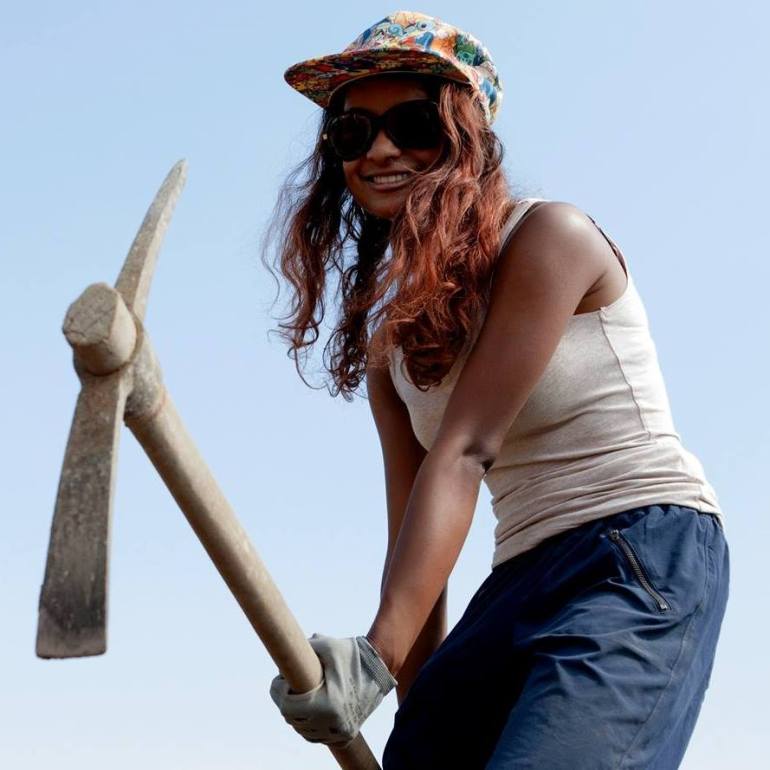
The first time I traveled alone was to Rome, Italy. I had worked on a research project helping to catalog and model artifacts and grave sites from an archaeological site just outside of Rome called Gabii. At the end of the year, my research advisor suggested that I come to the dig. I had never been so excited. I read all the Sisterhood of the Traveling Pants books when I was younger and I remembered how Bridget had found a female skeleton in the ground and likened it to her own mother and discovered truths about herself. I wondered if I would also discover truths about myself.
Rome was incredible – incredibly hot, with incredibly delicious food, and incredibly ancient artifacts. It was fascinating to me, the way that the ground was littered at the site with pottery that was around three thousand years old, and it was no big deal at all. There is something eternal about holding something so ancient in your hands – its almost like you are trying to start a conversation with the person that once held it.
I soon shifted away from archaeological anthropology and towards cultural anthropology. I wanted to interview people, to understand why people acted the way that they did. My own story itself was confusing. Maybe I hoped that in studying culture, I would understand my own.

I was born in Ann Arbor, Michigan on June 28 1997. My mom said that the peony garden in the arboretum next to the hospital bloomed late that year, and my grandparents, then only parents, took many pictures with the colorful flowers, awaiting my arrival. They were far from their home.
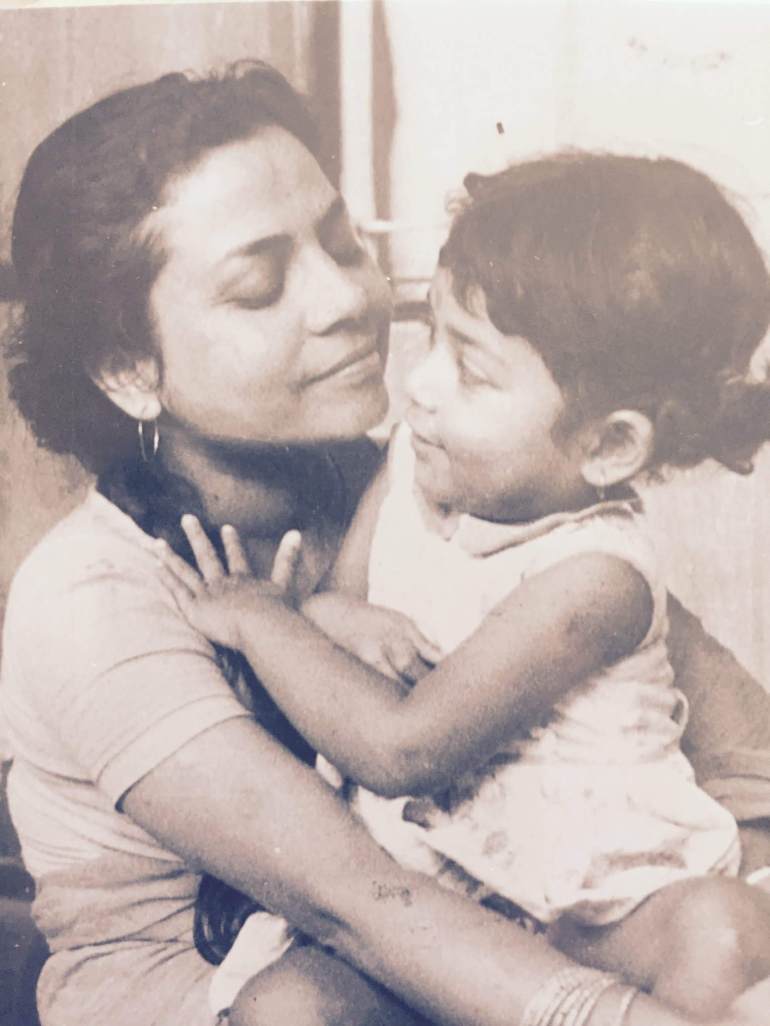
Both of my grandfathers spent their early childhoods in Calcutta, West Bengal, India, before the state of West Bengal existed, when Bangladesh and West Bengal were just one region that was ruled by the British Empire. In 1947, India gained independence from the British. Not long after, a period of violence followed, as the region had been split up into two different countries: India and Pakistan. The country of India split Pakistan into two pieces, Pakistan and East Pakistan, now Bangladesh. Pakistan and East Pakistan were supposed to be a Muslim state. This split was called the partition, and with it came an anarchical type of violence. People randomly killed, burned, and stole as a chaos ensued. My grandfather watched his childhood home burn down as a kind Hindu neighbor housed him and his family. He had to escape the country, spending some time sheltering in a jail, before he was able to make it to Jessore, the village in East Pakistan where he met my grandmother.
My other grandparents also ended up in East Pakistan, one way or another. I hope to interview them someday and record their stories in detail. Its something that should never be forgotten.
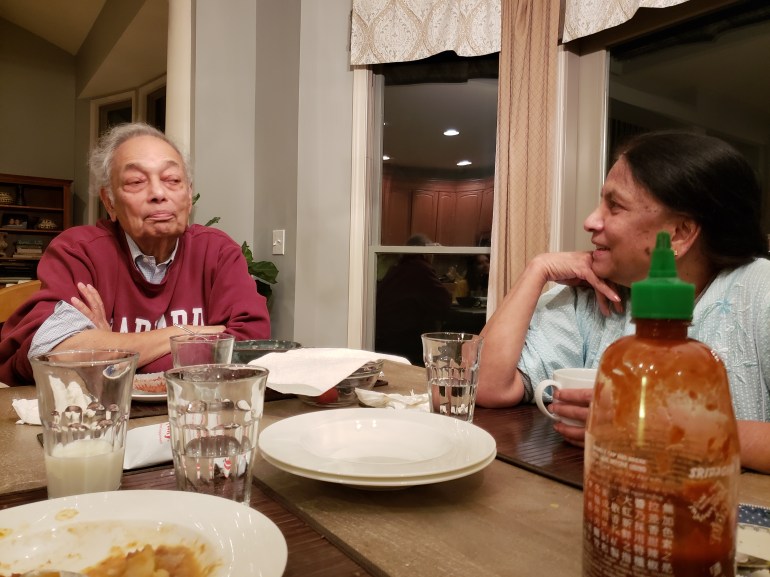
Many years passed. One grandfather married my grandmother, taking her across the ocean with him as he went to pursue a doctorate in thermodynamics at Texas A & M. The other grandfather studied city planning in Athens, Greece, and went on to continue his studies at Harvard University while my grandmother studied Psychology at Boston College. Everyone in my family has such a love of learning, and it is quite inspiring.
The grandfather that studied at Texas A & M eventually decided to move back to East Pakistan and become a professor. There, my mother, Pauline, was born. They spent her first three birthdays with aunties, uncles, cousins, samosas, and birthday cake. And all was well, for a time. They welcomed a second daughter, my mom’s younger sister Pamela. It was 1970.
In 1971, a civil war broke out between East and West Pakistan. There was an organized genocide against Bengalis that was specifically targeting the educated. My grandparents had to flee the country in order to escape the danger. They took two suitcases and two daughters with them, and settled in the United States with a cousin. They never moved back to their home.
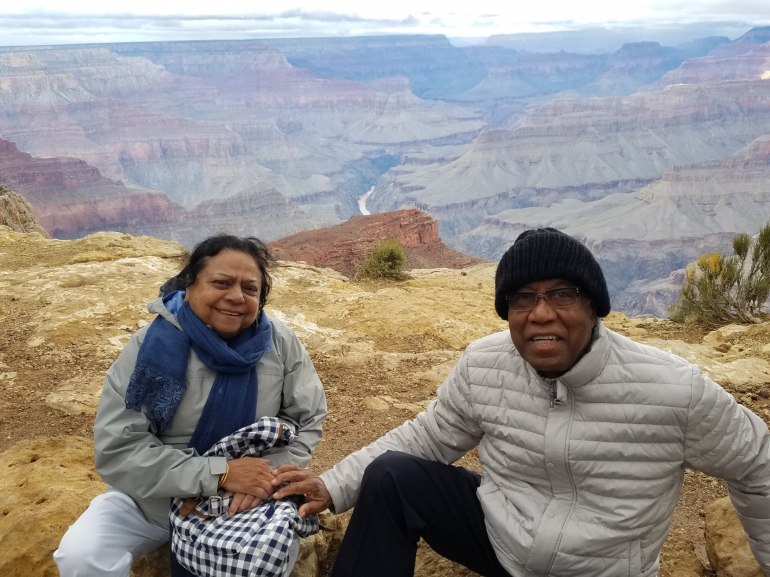
Eventually, East Pakistan gained independence and became known as Bangladesh. My grandparents visit Bangladesh every few years, bringing back little treasures like shiny bags and golden earrings and mangoes so sweet that they melt on your tongue. I never thought I would see Bangladesh. For some reason it just seemed like that side of the world was just too far away, both physically and for my own American-raised mind to comprehend. But curiosity about my ancestral past continued to plague me, and it still does.
Eventually my parents met, on the other side of the world from where their people had come from, in a residential hall called Bursley at the University of Michigan. They married in 1994, had their first daughter in 1997, and then in 2015, moved in that daughter to the same floor of Bursley Hall that her father stayed in. Its strange, how circular life can be sometimes.
And so here I was, a brown girl in a small American town in Metro Detroit. The product of a beautiful and tragic story, rooted in deep historical themes like colonialism, race relations, and genocide. How can I place the identity that I am? I am neither Indian, nor Bengali, nor American. I am all of those things, and something in between, and none of those things all at once. Many times I feel like a blank sheet of paper waiting for someone to write a fantastical story on it. But more and more, I feel as if I am moving the pen to write this story upon myself, and to share it with the world.
Since Rome, I have traveled to Spain, Japan, and India. In India, I began to chase my own roots, and I found a place that I hope to return to many times to try to understand my own origins. No matter where I visit in the world, I hope to find similarities between vastly different people, to connect them together and make each of their individual worlds more relatable to one another. Then maybe it will be easier for others to look at our universe through a new kaleidoscope.
I hope that you enjoy the perspectives that I share in this blog. I have truly put my best effort into challenging my own viewpoints to create new ones, into exploring hidden corners of all the places I visit, and into trying, even a bit, to see things through the eyes of others. I will call myself a ‘casual anthropologist’ – while I am not doing any serious research at the moment, I still am trying my best to take field notes, remain carefully observant, and retain every detail that might help me understand what it means to be a complicated and striking creature called a human being.

 World of Kaleidoscopes